

My grandfather's mandolin music sat in a folio for ninety years. Then my father heard it.
About three days before I was due to leave the country, my father George started stomping around the house in a most sullen disposition. There were dismissive exhales, sudden exits from the room, and even the occasional slammed door emanating from the other side of the house. To be clear, this wasn't entirely out of character for a Greek academic possessed of fiery passion, but those episodes were generally related to things like a heated disagreement with a colleague over some aspect of linguistic theory, a frustrating holdup with a publisher, or outrage over the spiralling and wholly unwarranted costs of imported Kalamata olives.
No, this was different. And the timing was terrible.
It was early June of 2005, and I was busy with my last few days of preparation before a planned move to the United States for what I expected would be about a year. The opportunity to spend time in the Northeast and get to better know my extended family had always been in the back of my mind, but the truth was, if I was ever going to try and give my writing a proper go, I knew I needed to get away and properly focus for a while.
Life in Australia had always been great — immediate family and friends close by, and a happy, busy existence in Sydney. Along with a pal I had started a small record label a few years prior managing and booking bands, which, while not so profitable, had been an incredible amount of fun. And, while I had been fortunate enough (thanks to a great deal of help) to channel those experiences into a book deal, I was very aware that the lifestyle was perhaps not all that conducive to carving out a career in writing (see: 3am and ordering another drink). So, off to the US it was, and not only to hopefully inspiring new experiences, but, I imagined, the opportunity for distraction-free time to hunker down in a small town somewhere and hone the discipline and craft skills needed to at least have a chance to make a career in words (see: still a work in progress, over twenty years later).
Those last few days at my parents' house in my hometown of Bathurst were a mix of anxiety and excitement — the understandable nerves of an extended trip away, sadness at farewelling family and friends for a time, but also the promise of opportunities ahead. All of it was made harder by a seething father looming over everything. I couldn't place the source of his angst, and I certainly didn't want to say ’bye for now’ when we didn't appear to be on good terms.
I turned to my mother, Marcia, for counsel: "Doesn't he know I'm about to leave for a year?"
She just shrugged her shoulders and smiled. “Maybe he’s just sad you’re leaving.”
Which my mother had nailed on the head in her wise, thoughtful reply. When it comes to Greek dads, one must always recognize that in times of great stress, emergency or need, the Hellenic temperament will often express itself in the exact opposite emotion most anticipated or needed for that moment. You need compassion? How about some blame. Want urgent action? Hold on while I finish this cigarette. You need a hug? Let me tell you about real hardship.
I’m joking, of course. My father — who died a year ago and would have wanted you to know he had quit smoking decades prior — wasn’t an emotional leper. But he could be complicated, and there were times when you had to go digging for the real meaning behind certain behaviours or reactions. Dad no doubt was sad I was leaving for a year, but he also knew from his own experience that one year away could quite quickly turn into far longer, and even half a lifetime apart or more (he certainly proved to be correct in this). Most importantly, he was fearful that we might never see each other again, dramatic as that might sound, because that’s exactly what happened with his own father.
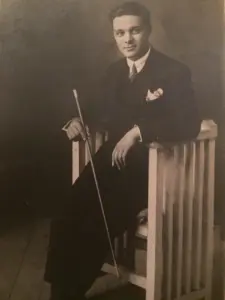
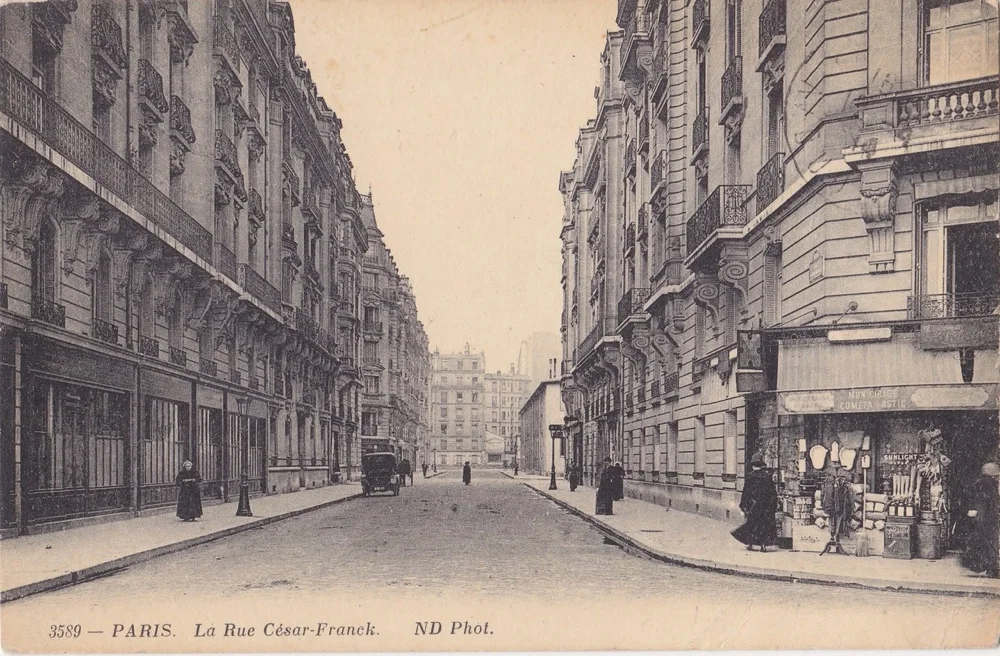
Dad was the son of Greek refugees and he had survived extreme poverty, malnutrition, and the horrors of World War II in his early years. His own father, Evangelos — also my namesake — had come from money once, enough to send him to France for a first-rate education and training as an engineer. But then the Depression and the wars took his career, his income, and most of his pride, and tuberculosis took the rest. He never fully recovered from any of it. Dad loved him dearly, but the man he described always came with a shadow attached: broken by war, and frustrated that he couldn't provide for his family the way he'd once assumed he would. Evangelos was a man built for a world that simply stopped existing.
A few years on Dad's hard work was rewarded with a Fulbright scholarship to study in America. The funds covered tuition and not much else, but he wasn't worried — this was a starting point, not a goodbye. He was close to his parents, proud to be Greek, and fully intended to build his career at home. So he was taken aback when his normally reserved father broke down at the airport. It was the only time he ever saw Evangelos cry. But his father knew.
Three months later, Evangelos passed away. He knew he was sick with lung cancer when he farewelled his son. He knew that sometimes life gets in the way and short trips become longer departures, and he knew innately that he was never going to see his son again. My father was too poor to fly home and back. Both his parents understood that if he returned to his father's bedside, he would lose the scholarship. So they agreed that George wouldn't be told of Evangelos' passing until after his degree was complete.
His mother finally told him two years later, on the eve of his return to Greece. Whenever Dad shared this story with me, he channelled his own father's stoicism and told it matter-of-factly. That opportunity, as he put it, was far more important for his own future — and for the future welfare of his mother — than shedding tears at the bedside of an ailing, soon-to-be-departed father. Evangelos could never have wanted that. George took it in stride, I suppose, and shook it off the best he could, as he had with so many other traumas and tragedies from those earlier years. Well — at least until that same possibility now presented itself with my own departure, as evidenced by his stomping about the house in a huff.
But 1967 Greece — still recovering from a world war and a civil war — was not 2005 Australia. Should such a family emergency now strike, I had the mighty power of a credit card to return me home, if needed (albeit perish the thought).
This was also a father's prerogative to worry. For years, since late high school, my father and I had repeatedly wrestled over my want to be a writer. It wasn’t that Dad didn’t respect or value the profession — hell, he had committed years of work and penned several books championing the work of Greek-born and Greek Australian writers, poets, playwrights and more. It was the fact that he knew just how many of them had struggled to make ends meet. It wouldn’t be an easy path ahead, and by all odds, unlikely to prove too lucrative. “Do you know how many writers sleep on park benches at night?” he would tease.
Dad came around a good bit when my first book was published, though he confessed to my mother that he half-feared it — proof enough to make me double down instead of taking one of those steadier paths that might have eased a worrying migrant father's blood pressure. No parent wants their child to repeat even an inch of their own struggle. It was never a lack of support. It was just, again, a father's prerogative to worry. And now it was manifesting itself in more stomping and more slammed doors.
So I was surprised when, on the day before my flight, George appeared at my side in the living room, holding out what looked like a blue book bound in some sort of embroidered cover. He seemed reluctant, a hint sheepish, jaw clenched against something he wasn’t going to say.
“Here. I wasn’t sure if you would find this of interest.”
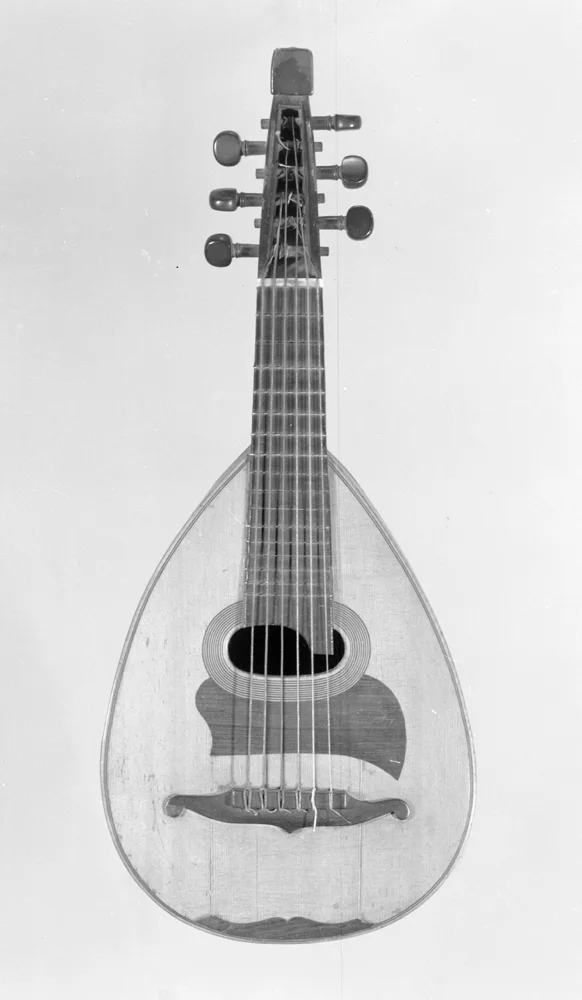
I took the book, which was stuffed with faded, yellowing paper. The binding was indeed ornately embroidered in green and blue, and in the middle of the cover it bore the initials ‘E.K’. My initials, but also those of my grandfather Evangelos. As Dad pensively watched on, I opened the book to discover hundreds of pages of poems, short stories and plays, written in Greek, French and English. Sketches and drawings of museum sculptures and ancient vases. And dozens of musical compositions for the mandolin. All written and drawn by Evangelos as a young student in Paris in the 1920s.
I can't quite tell you what a gift this was. I still don't really know why Dad had kept these pages — and this side of his father — a secret for so many years. There had been one or two shared, vague recollections of my grandfather wearing a French cape and courting my grandmother with a mandolin, but they were always dismissed as somewhat ridiculous and overly romantic. Perhaps Dad thought of these pages as the 'silly love songs and bad poetry' of an angsty youth. Or perhaps they were irreconcilable with the later, war-torn version of Evangelos he actually knew — a side of compassion, idealism and hope he never got to see for himself. Or perhaps it was simply that Dad felt these pages presented far too much risk of encouragement for his equally afflicted son. He was most certainly right.
For now, on the eve of my departure, my father had finally relented. For all the years of back and forth about smarter, more practical paths forward versus blindly following one's heart, he never said these exact words, but with each page, another revelation from my grandfather's secret past made one thing clear. Dad was saying, begrudgingly, "God damn it. Fine… It's in your blood. Go after it. You have my blessing. And you have your grandfather's blessing, too."
After that day, Dad never again brought up my intention to pursue a career in writing. Not once.
For all his eyerolls and cynicism, George was also clearly proud of his father's creative youth. My grandfather's handwriting was rather illegible and faded, but Dad seemed excited, even liberated, to translate some of the poems and short prose pieces into English for me. From one titled '29th September, 1925':
Is your sleep so peaceful, the dream so sweet?
I was just a child when you left me to rest
Left me to become a man on my own
Tell me—
Should I fly to your dream, too?
Would I be happier there?
"So many tearful poems calling for his late father!" he moaned. But I knew he adored it.
I left for America with photocopies of the folio in my bag — I dared not risk the originals. I wound up making my home in Maine and set about putting my father's worries to rest.
But once settled into life in the US it kept gnawing at me that while Dad may have taken the occasional peek at his father's writing over the years, he had never heard a note of the music. The mandolin had been set down long, long before Dad was even born, and through those hardships of the war years, there was never time for song. Music in the house wasn’t really a memory George ever spoke of, in clear contrast to the polkas, rock and roll and 60s folk music of my mother’s upbringing in Boston.
Some time earlier I had reached out to the most talented musician I knew — a college friend, Damian de Boos-Smith — and asked if he might look over some of my grandfather's sheet music, and perhaps even record one of the pieces, if any of it qualified for such an effort. Damian generously agreed. I sent the CD ahead to Mum.
Which is how, a short time later, I came to be watching my parents through a laptop screen in Bangor, Maine, some 10,000 miles from Bathurst. They sat side by side at the computer in Dad's study. I told him we were about to hear a piece written by his own father — "Marche Mandolinisie," composed nearly ninety years earlier. Mum pressed play.
The song was a simple little ditty, but Damian had performed it beautifully. For a little over two-and-a-half minutes I watched my father, absorbed, taking in every sweet pluck and twang of the mandolin, punctuated by double stops and chords of emphasis, then finishing with an unexpected flourish of hurried picking. It wasn’t that this was some masterpiece (and it wasn’t, though beautiful it was). It was that all three of us were, in that moment, transported back through the years to some Paris dormitory after midnight, where Evangelos, barely twenty and with so many hopes and dreams ahead of him, penned a sweet chanson that had finally reached the one person it was waiting for. Afterward we sat in silence for the briefest of seconds, and I could see tears filling my father’s eyes until he reflexively caught himself, straightened up and shook it off with a chuckle.
“Well how about that, huh? Your grandfather was a sentimentalist!”
We laughed. Deep down I'm sure Dad always knew that part of his father had existed, and I was just glad to hand him the proof. Dad was right about me in the end — one year in America became more than twenty — though in those two decades we kept finding our way back to each other, time and again.
Sometimes gifts from the people we've loved arrive long after they're gone. For the longest time I figured that song to be my greatest gift to Dad. But the difference between us is that I did get a chance to say goodbye to my father.
Late on a Wednesday night last August, I sat alone with Dad in a hospital room in Bathurst as he took his last breath. I held his hand. I told him I loved him, that I would protect and honour his family and his legacy, that he was safe and all was okay.
This was, beyond doubt, the most important thing I could ever have done for my father — more important than any song I could have played him, and more important than any unnecessary quest for his approval. Whatever I'd once wanted Dad to see in me was washed away in that room. That was his gift to me — heartbreaking and beautiful at once. Naturally I wish I'd had more time with him. But unlike his father, I won't be writing poems crying out why and why again.
Our song isn’t a heartbreaker. It just keeps marching on.